
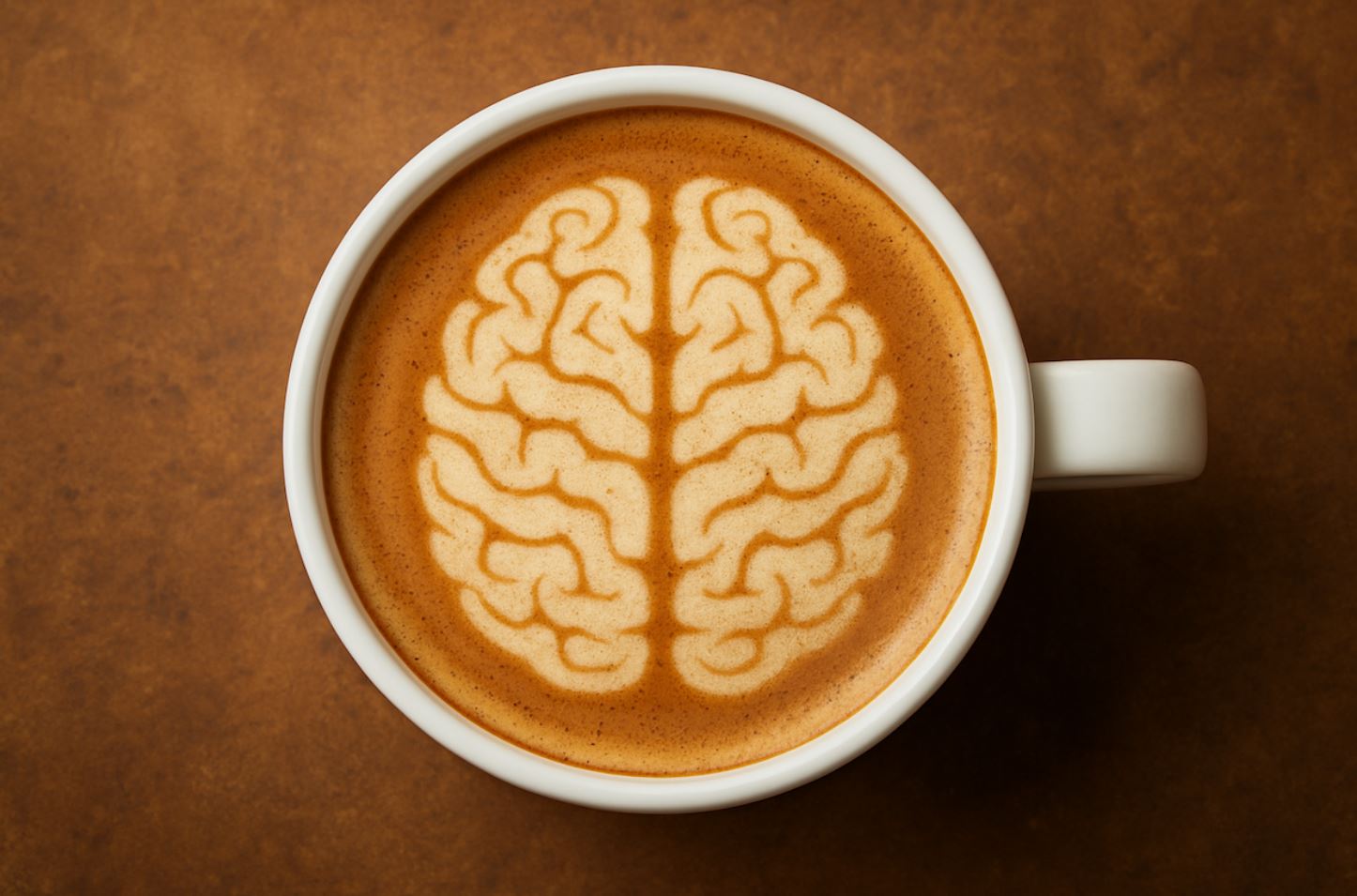
In a first-of-its-kind study using artificial intelligence and brainwave analysis, researchers from the University of Montreal said caffeine can make the sleeping brain more active and less restful — particularly in young adults.
Published in the Springer Nature journal Communications Biology, the study analyzed the effects of a 200-milligram dose of caffeine — the equivalent of about two cups of coffee — on the overnight brain activity of 40 healthy adults.
The research team employed electroencephalography (EEG) and machine learning to measure how caffeine altered neural patterns during sleep.
Their central finding was that caffeine increases the “complexity” of brain signals, pushing the brain towards a state of “criticality” — a balance between order and chaos that’s typically ideal for daytime functioning but may interfere with nighttime recovery.
coffee and the brain 1
“It’s like an orchestra: too quiet and nothing happens, too chaotic and there’s cacophony,” study author Philipp Thölke said in an announcement from the university. “Criticality is the happy medium where brain activity is both organized and flexible.”
Another study author, Julie Carrier, noted that while a state of criticality is useful for concentration during waking hours, it may interfere with a good night’s rest. Said Carrier, “The brain would neither relax nor recover properly.”
Brain Stimulation During Sleep
On nights when participants consumed caffeine before bed, their brain signals were more variable and unpredictable, particularly during non-REM (NREM) sleep, which is critical for memory and cognitive recovery. Compared to a placebo, caffeine reduced the presence of slower brainwaves like theta and alpha — which are normally associated with deep sleep — and boosted beta waves, which are linked to wakefulness.
Notably, the changes in brain activity were more prominent in younger participants (ages 20-27) than in middle-aged adults (ages 41-58). The researchers suspect this is because younger people have more adenosine receptors in the brain — the targets that caffeine blocks to produce its stimulant effect.
This study adds to growing evidence that caffeine can significantly alter the brain’s nighttime rhythms — even at moderate doses and even in people who regularly consume it.
Methods and Limitations
The study involved participants sleeping in a lab for two nights — once after taking caffeine capsules and once after taking a placebo. EEG data was recorded from over 50,000 20-second moments during NREM and REM stages. The researchers then used statistical tests and machine learning to compare brain activity between the two nights.
Notably, while caffeine clearly affected brain dynamics, the researchers found these effects were not solely due to sleep disruption — meaning the drug changes how the brain behaves during sleep, not just whether people fall asleep.
The researchers noted numerous limitations, including the study’s small sample size, its focus only on healthy adults and the inability to determine how long the effects of caffeine on sleep-related brain activity may last.
Source: Dailycoffeenews.com
