
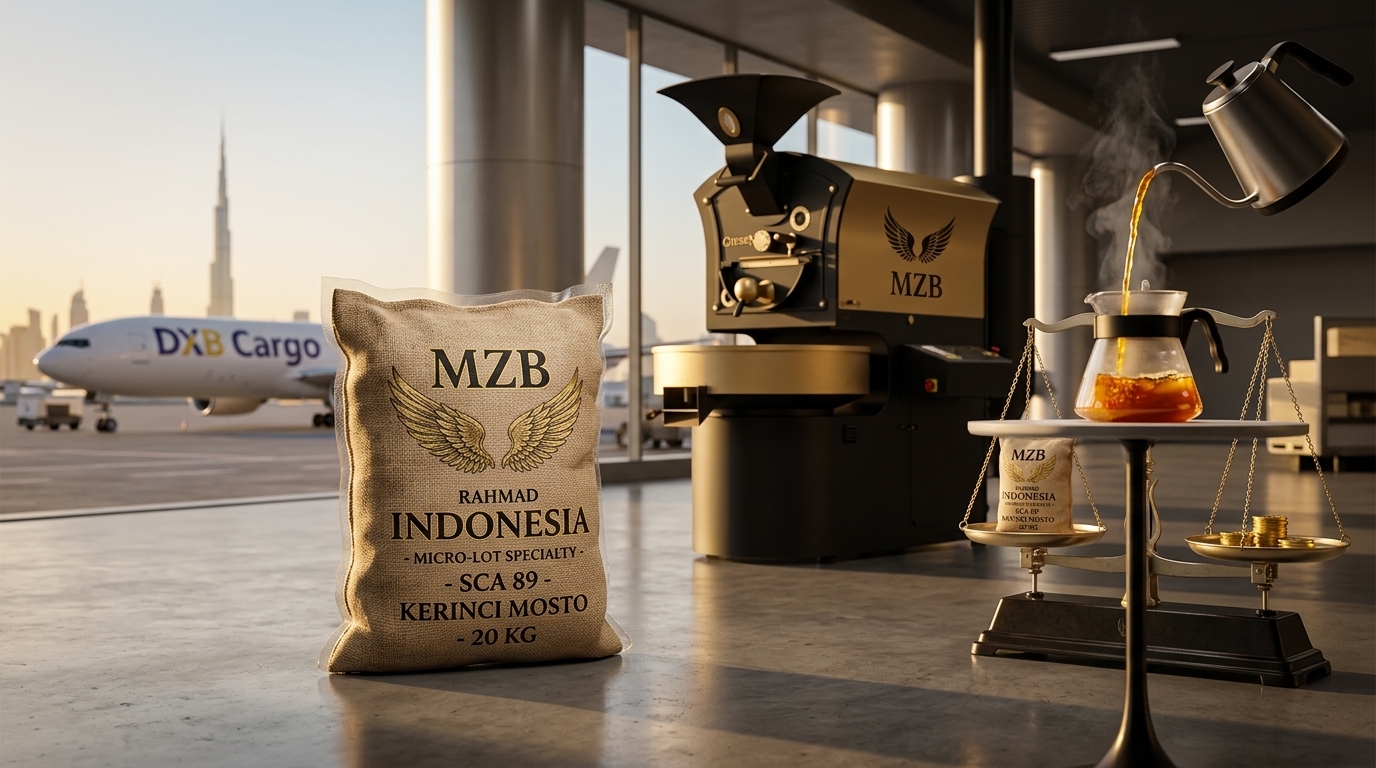
In the high-stakes world of Dubai’s specialty coffee scene, speed to market and uncompromised quality are everything. While traditional coffee logistics rely on massive 20-ton sea freight containers navigating ocean routes for months, a growing number of top-tier Dubai roasteries are completely bypassing the maritime route. Instead, they are turning to high-efficiency, air-freighted micro-lots to supply their brew bars.
This strategic shift is redefining coffee commerce across the emirate. Here is why air-freighted micro-lots are dominating Dubai’s specialty coffee market in 2026.
1. Absolute Moisture & Peak Freshness Preservation
Green coffee is an organic, hydroscopic product. When trapped inside ocean shipping containers for 40 to 90 days, green beans are subjected to severe ambient temperature swings, humidity spikes, and the constant risk of "container sweat." This degrades the coffee's delicate organic acids and dampens its sensory potential.
- Transit Time: Air freight reduces transit times from months to as little as 3 to 5 days directly from origins like Sumatra, Yirgacheffe, or Boquete to Dubai International (DXB).
- Flavor Protection: Micro-lots retain their peak moisture content (10–12%) and delicate aromatic compounds, allowing Dubai roasters to unlock bright, pristine acidity and true-to-origin flavor notes that sea-freighted beans often lose along the way.
2. Matching the Appetite for Ultra-Specialty Exclusivity
Dubai’s specialty coffee consumers are among the most discerning in the world. High-net-worth individuals, local coffee connoisseurs, and international tourists are actively seeking coffees with cupping scores of 88 to 90+ SCA points.
- Scarcity Value: Micro-lots typically weigh between 50 kg and 300 kg. Because quantities are inherently limited, holding an exclusive lot allows a cafe to create a high-demand, limited-edition menu item.
- Commanding Premium Prices: Consumers in Dubai are more than willing to pay premium prices for a pour-over when they know the coffee is a rare harvest that cannot be tasted anywhere else in the city.
3. Lower Capital Risk & High-Margin Arbitrage
For boutique roasteries and independent cafes, tying up large amounts of working capital in massive sea-freight orders carries significant inventory and financial risk.
- Agile Cash Flow: Purchasing smaller, air-freighted micro-lots allows roasters to keep their inventory lean and agile. Capital isn't trapped in warehouse storage for months.
- Superior Profit Margins: While air-freight shipping costs per kilogram are higher than sea freight, the significantly higher retail price per cup or bag yields a far superior net profit margin. Selling a high-scoring, air-freighted micro-lot generates significantly more margin per kilo than selling high-volume commodity coffee.
4. Seamless Customs & Airport-to-Roastery Logistics
Dubai's world-class logistics infrastructure makes air-freight import remarkably smooth.
- Simplified Clearance: With streamlined phytosanitary certification and efficient customs clearance procedures at DXB cargo terminals, green coffee can move from the tarmac to the roastery’s drum in under 24 hours.
- Direct-from-Origin Access: Roasters can build direct relationships with smallholder producers, securing micro-lots immediately after harvest and milling without waiting to fill a full shipping container.
The New Standard for Dubai Roasters
Air-freighted micro-lots are no longer just a niche experiment—they have become a core competitive advantage for Dubai’s leading specialty coffee brands. By prioritizing freshness, exclusivity, and supply chain speed, local roasters are continuing to set global benchmarks for what a specialty coffee experience should be.
