
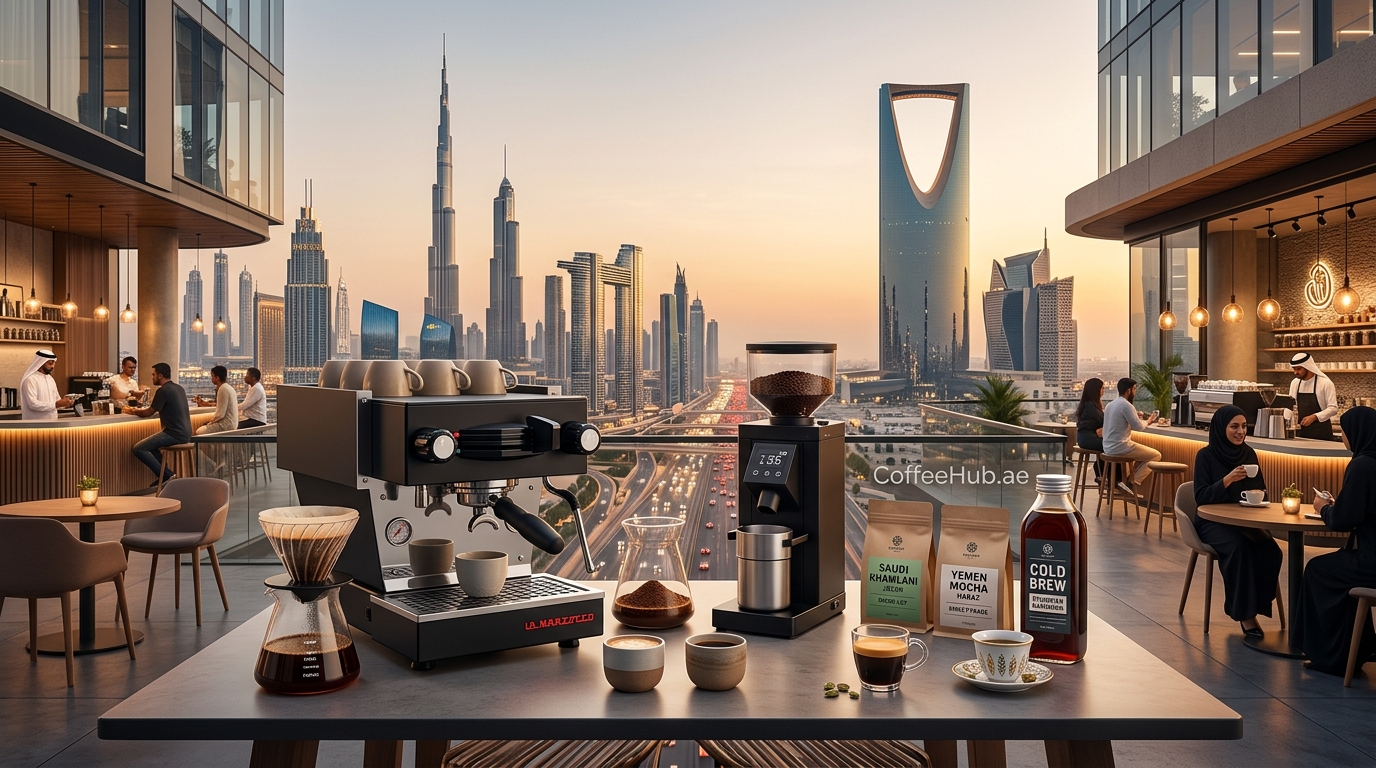
The specialty coffee scene in the Gulf Cooperation Council (GCC) is no longer just expanding—it is actively setting global standards. From the bustling espresso bars of Dubai Financial Centre (DIFC) to the vibrant, design-forward cafes of Riyadh’s Al Olaya district, consumer demands in the UAE and Saudi Arabia have matured rapidly.
What used to be a market dominated by sugary milk drinks and commercial roast profiles has transformed into a sophisticated ecosystem driven by single-origin transparency, high-end home brewing gear, and a deep appreciation for local coffee heritage.
Here are the key forces shaping the specialty coffee landscape across the UAE and Saudi Arabia in 2026.
1. The Renaissance of Saudi Khawlani & Yemeni Origins
While Ethiopian, Colombian, and Panamanian Geishas continue to hold prestige, local and regional origins are experiencing unprecedented demand across GCC specialty cafes.
- Saudi Vision 2030 Impact: Under national initiatives supporting regional agriculture, Saudi Khawlani coffee harvested in the southwestern mountain terraces of Jazan has evolved from a cultural tradition into a high-scoring specialty commodity. Micro-lots with experimental natural and anaerobic fermentations are winning over local roasters.
- Yemeni Revival: Yemeni beans from regions like Haraz and Matari remain highly prized in Dubai and Abu Dhabi for their distinct winey acidity and complex spice notes. Direct-trade networks established between Gulf buyers and Yemeni farming cooperatives have significantly improved post-harvest processing quality and supply reliability.
2. Advanced Extraction & Precision Home Barista Gear
The Gulf home barista market is among the fastest-growing worldwide in terms of average spend per setup. As remote and hybrid work routines normalized across the region, enthusiasts shifted from basic manual brewers to commercial-grade kitchen setups.
Feature / TrendMarket MovementPopular Consumer ChoiceWater CustomizationRemineralized Reverse Osmosis (RO) water tailored for specific roast profiles.Third Wave Water packets, custom remineralization filtersGrinder TechUltra-low retention single-dosing grinders with flat burrs.64mm to 98mm burr sets (e.g., Option-O, DF83, Lagom)Espresso ProfilingReal-time pressure and flow control machines.Decent DE1, Sanremo YOU, La Marzocco Micra
Local consumers are increasingly focused on water chemistry, recognizing that tap water and generic bottled brands in the UAE and KSA require precise total dissolved solids (TDS) management to extract specialty roasts properly.
3. Beyond the Spanish Latte: Experimental Processing & Pure Flavor
For years, the sweet Spanish Latte was the undisputed champion of GCC coffee menus. While milk-based beverages still account for a substantial volume of sales, consumer palates are leaning noticeably toward filter coffee and unadulterated espresso.
                  [ GCC Consumer Palette Shift ]
                                │
        ┌───────────────────────┴───────────────────────┐
        ▼                                               ▼
[ Traditional / Milk-Based ]                [ Modern Specialty ]
 - Spanish Latte                             - Anaerobic Naturals
 - Cardamom Gahwa                            - Thermal Shock Fermentation
 - Iced Flavored Espresso                    - Single-Origin V60 / Batch Brew
- Anaerobic & Thermal Shock Beans: Roasteries in Dubai and Riyadh are heavily stocking beans processed through controlled anaerobic fermentation and thermal shock. These methods highlight vibrant fruit-forward notes (passionfruit, blueberry, papaya) that appeal to consumers seeking bold, distinct cup profiles without added syrups.
- Cold Extraction Innovation: With high temperatures persisting for much of the year in the Gulf, nitrogen-infused cold brews and flash-chilled filter coffees are daily essentials rather than seasonal options.
4. Sustainability & Direct-Trade Sourcing
Transparency is becoming a decisive buying factor for coffee lovers in Abu Dhabi, Dubai, Riyadh, and Jeddah. Consumers increasingly want to know:
- Who grew the coffee, and were the farmers paid above fair-trade baselines?
- How was the raw coffee imported to mitigate carbon footprint?
- Is the roastery using eco-friendly packaging suitable for humid regional storage?
Roasteries that communicate clear direct-trade relationships and offer fully compostable or recyclable valve bags are gaining strong brand loyalty among younger demographics in the region.
